Why You Study Better at 2AM (And You're Not Alone)

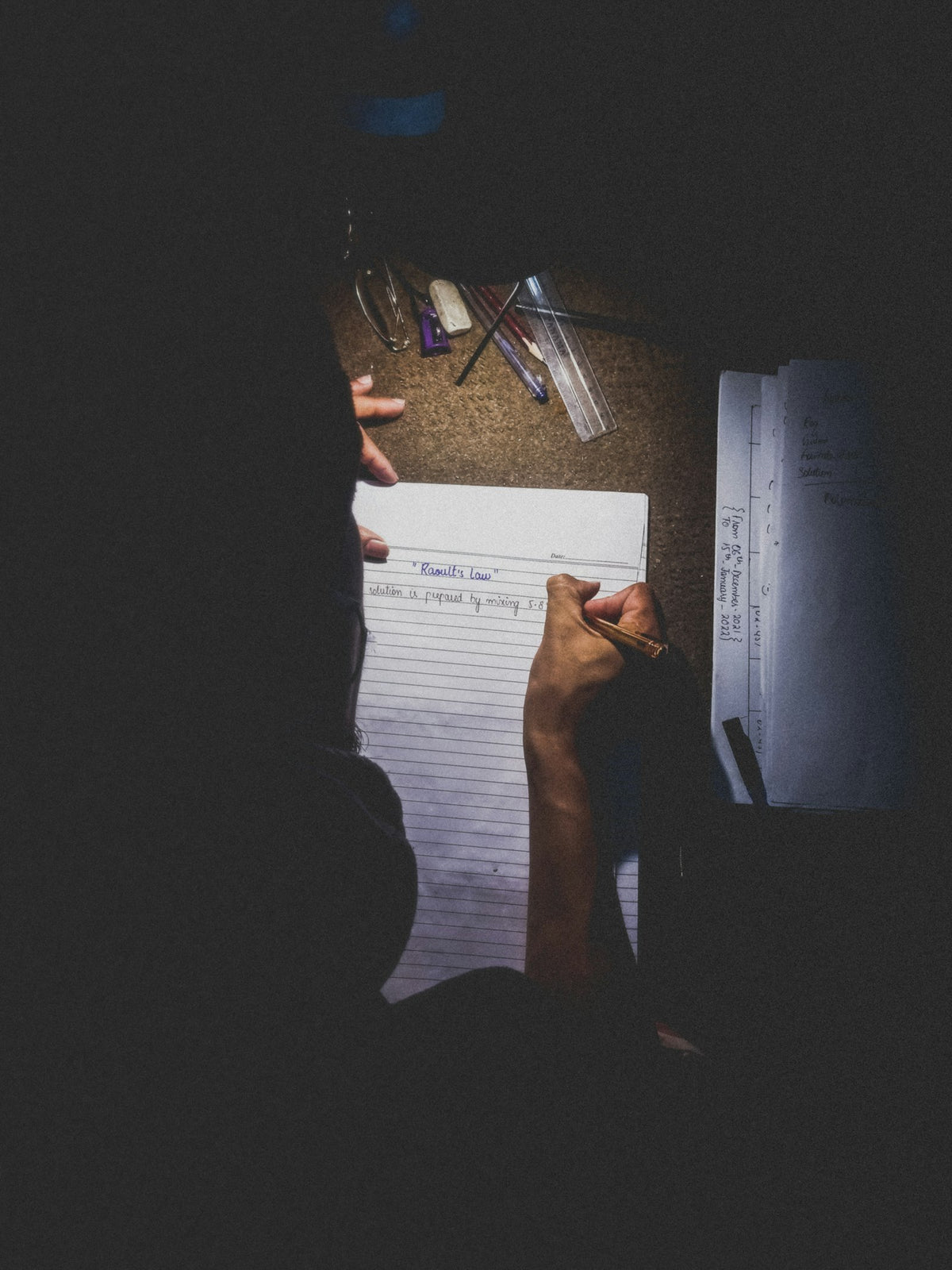
It's 2AM. Your flatmates went to bed hours ago. The building has that particular silence — not empty, just stilled. You're at your desk with a mug going cold beside you, notes spread out, screen glow cutting through the dark. And the strange thing is: you don't feel tired. You feel clear. Like the world finally got quiet enough for you to think.
If you've ever done your best studying at night — really locked in, uninterrupted, sentences flowing — you already know what this is. Studying at night has its own texture. And you're not the only one awake in it.
The Night Has a Different Quality
There's something that happens after midnight that daytime hours can't quite replicate. The notifications slow down. The group chats go quiet. Nobody's going to knock. The version of you that performs for other people — in seminars, in group projects, in the busy café where you keep looking up — that version takes a break. What's left is just you and the work.
For a lot of students, this is the only time the day actually belongs to them. The daytime is scheduled: lectures, commitments, the low hum of social obligation. But 11PM onwards? That's uncontested time. Nobody booked it. Nobody's expecting anything from you in it. Which is exactly why so much real work gets done there.
The library is empty. The café is closed. Your room is yours. And something about that — the absence of audience, the hush of a building at rest — makes it easier to start, and harder to stop.
What Studying at Night Does to Your Brain
It's not just a feeling. Research from Imperial College London found that people who identify as evening types — natural night owls — demonstrated stronger performance across a range of cognitive tests, including attention, working memory, and processing speed, compared to those who preferred mornings. The researchers weren't suggesting late nights are universally better; they were pointing at something more interesting: that working against your natural chronotype costs you something.
In other words, if you're a night person forcing yourself through a 9AM study session, you're not just tired — you're fighting your own biology. The student who feels sharpest at midnight isn't making a bad choice. They might be making the right one.
This is what makes the night feel different from the day. It's not the absence of light. It's the presence of alignment — being awake at the time your mind actually wants to be awake.

You're Not Actually Alone in It
One of the quieter things about studying at night is the isolation — and yet, right now, there are thousands of people in the exact same position you're in. Laptop open, same uncertain hour, same mug. The study-with-me corner of the internet exists precisely because of this: millions of people watching someone else work in real time, not for the tips, but for the company.
There's a word for it now — body doubling, the phenomenon where having another person present (even virtually, even silently) makes it easier to focus. It works because the brain treats the presence of another person as a kind of anchor. You're less likely to drift when you feel, even distantly, that someone else is in it with you.
That's what the 2AM study session has always been, in a way — a private version of communal effort. The city sleeps. A smaller city, just the awake ones, keeps going.
The Uniform of the Late-Night Session
There's a reason you reach for a hoodie when you sit down to work at midnight. It isn't a conscious choice. It's more like instinct — the same way you'd make tea before settling in, or put on a specific playlist. The hoodie is part of the ritual.
Comfort and cognition are more connected than people admit. When your body feels settled — warm, unrestricted, wrapped in something soft — the low-level discomfort signals that usually compete for your attention go quiet. You stop noticing the temperature. You stop fidgeting. The friction between you and the work decreases.
The heavyweight, oversized fit matters here. It's not about looking good at midnight — nobody's watching. It's about the physical weight of it, the way a good hoodie sits on your shoulders, the warmth that doesn't fade after an hour. The kind of thing you put on and forget you're wearing. That forgetting is the point.

The Quiet Ambition of the 2AM Student
There's something worth naming about the kind of person who's still working when everyone else is asleep. It's not always procrastination — sometimes it's the opposite. It's the person who wants something enough to claim the hours nobody else bothered with. To take the part of the day that's unchosen and make it theirs.
The 2AM student isn't avoiding the work. They're protecting it from interruption. They're building something — an essay, a project, a skill, a future — in the margins of everyone else's schedule. That's not a bad habit. That's a particular kind of discipline.
So if this is you — if you do your clearest thinking after the rest of the world has gone quiet — you don't need to fix it. You just need to set up for it. Know where your notes are. Have something warm to drink. Put on your hoodie. And let the night work the way it works for you.
Imagery: Rafay Ansari, byVlado, Yen Vu via Unsplash