Article: Why Your Study Setup Matters More Than Your Study Playlist
Why Your Study Setup Matters More Than Your Study Playlist

You’ve got the playlist. The coffee is still warm. You’ve opened three tabs, closed two of them, and told yourself that this time you’re actually going to sit down and do the thing. But something about the room feels off. The light is too bright, or the chair isn’t right, or there’s a pile of clothes on the edge of your peripheral vision. Twenty minutes later, you’re somewhere else entirely — mentally, if not physically.
The playlist did nothing wrong. The problem was the room.
There’s a reason certain spaces make you feel capable the moment you enter them, and others seem to quietly drain whatever intention you walked in with. The study setup — that modest arrangement of desk, light, device, and chair — isn’t just furniture. It’s a signal you send yourself about what kind of work is about to happen. Get it right, and the work almost asks for you. Get it wrong, and you’ll spend your most productive hours fighting the environment rather than the material.
Why Your Environment Shapes Your Behaviour
The idea that physical space influences mental state isn’t new. Architects have known it for centuries. What’s interesting is how it plays out on the small, domestic scale of a student’s room or a corner of a shared flat.
Your brain is constantly reading context. It notices whether a space is associated with rest or with effort, whether the light feels alert or drowsy, whether the chair puts your body into a posture of focused attention or casual collapse. Over time, these associations compound. The desk where you’ve done serious work starts to feel serious the moment you sit at it — before you’ve opened a single file. The bed where you try to study stays associated with sleep, no matter how insistently you arrange your notes on it.
This is why a study setup is worth building deliberately. Not for TikTok. For yourself.
What a Good Study Setup Actually Is
The internet’s version of a study setup is a particular aesthetic: ring lights, pastel stationery, colour-coded notes, a spotless desk with one artfully placed succulent. It photographs well. It may or may not work.
The version that actually works is less concerned with appearance. It’s about removing friction — reducing the number of decisions and micro-irritations that stand between you and the thing you’re supposed to be doing.

A clear surface means you’re not shuffling things around before you begin. A dedicated notebook — separate from every other notebook — means you know where to put a thought. A phone face-down, or in another room, means you’ve made the decision once rather than resisting it every forty seconds. These aren’t productivity hacks. They’re just the removal of what didn’t need to be there.
There’s also physical comfort to consider, and it matters more than most people admit. If you’re cold, your attention keeps returning to the fact that you’re cold. The small, persistent discomfort of a drafty room — or an underheated library in the middle of revision season — is a cognitive tax. It’s not dramatic enough to feel like a problem, but it sits in the background of every thought. There’s a reason you reach for the same hoodie every time you settle in for a long session. Warmth is not a luxury in these moments. It’s a condition for the work.
The Details Worth Getting Right
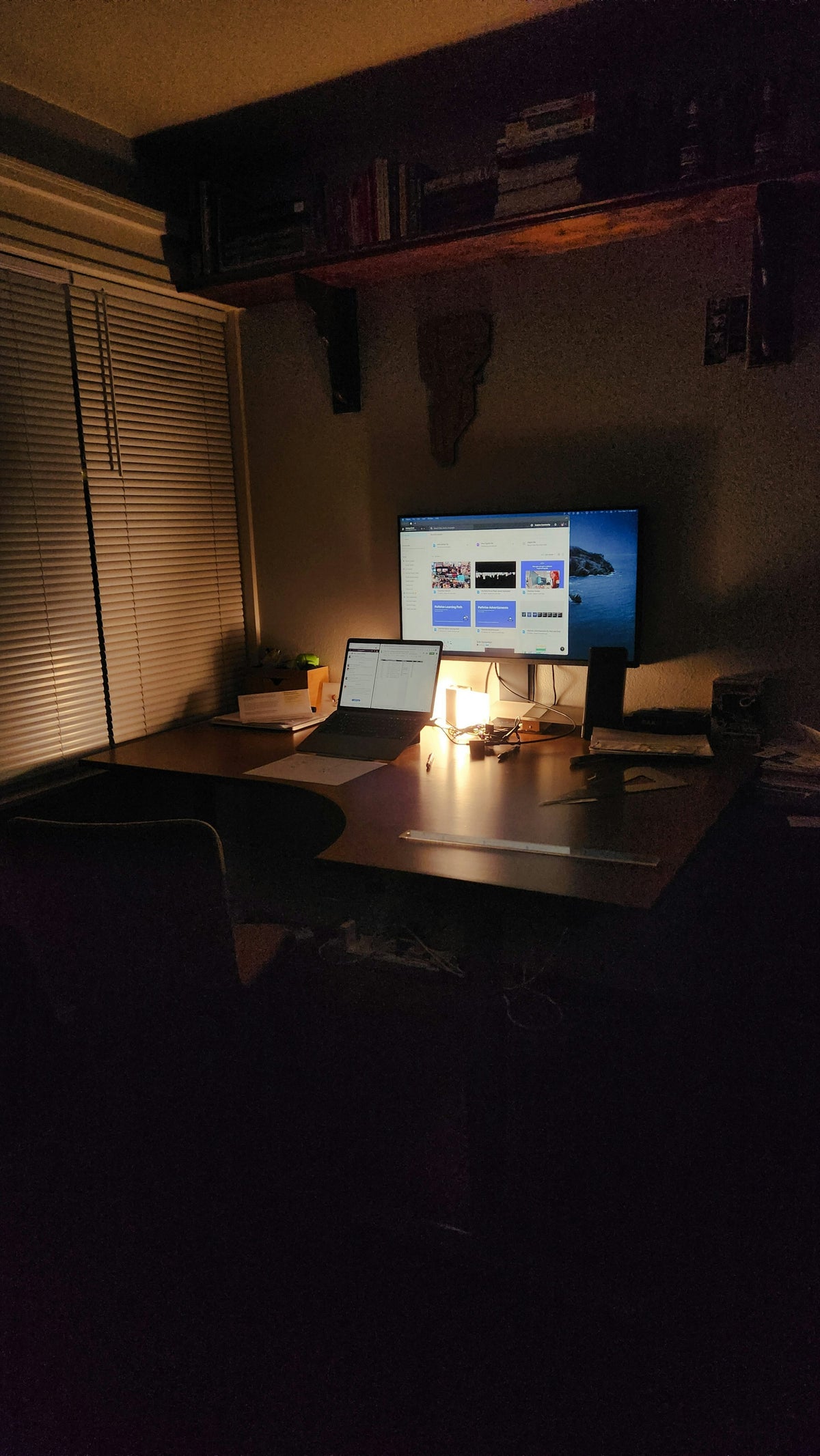
Light temperature is underrated. Bright, cool white light is alerting — useful for the morning, but harsh and fatiguing over long stretches. Warm, lower-level lighting (a desk lamp rather than an overhead) creates a softer atmosphere that most people find easier to sustain. It’s the difference between a fluorescent office and a café where you somehow always get things done. Many students who swear by late-night working are, without realising it, benefiting from the warm light as much as the quiet.
Chair height matters. Your screen height matters. These are the things that cause you to physically shift, stretch, or slump after an hour, and then again after ninety minutes, until you’ve spent more time adjusting yourself than reading. A monitor or laptop stand that brings your screen to eye level is one of the cheaper improvements you can make to how long you can actually sustain focus.
Noise is personal. Some people think in silence; others need ambient sound to keep the restless, commentary-generating part of their brain occupied. Neither is wrong. What doesn’t work is unpredictable interruption — someone walking in unannounced, a phone buzzing, a conversation bleeding through the wall. The brain’s attention system responds to novelty involuntarily. You can’t out-will it. You can only reduce what triggers it.
The Setup as Intention
There’s something else worth saying about the act of building a study setup, beyond the practical. In a period of life that often feels reactive — deadlines arrive, assignments multiply, the academic calendar moves whether you’re ready or not — the deliberate arrangement of a workspace is one of the few things you control entirely.

It’s a quiet act of self-organisation. A way of saying: I’m taking this seriously. Not the kind of seriously that requires noise and visible effort, but the private, settled kind — the sort that shows up in how you’ve angled your lamp and cleared your desk and put your phone where it can’t easily distract you.
The study playlist will help or it won’t. The app that blocks social media for two hours will feel liberating or oppressive depending on the day. But the room — your room, arranged intentionally, warm and quiet and yours — tends to come through. Not every time. But reliably enough to be worth the effort of getting it right.
Start there.
Imagery: Zoshua Colah, Rafay Ansari, Kouji Tsuru via Unsplash