The Uniform of Late-Night Students
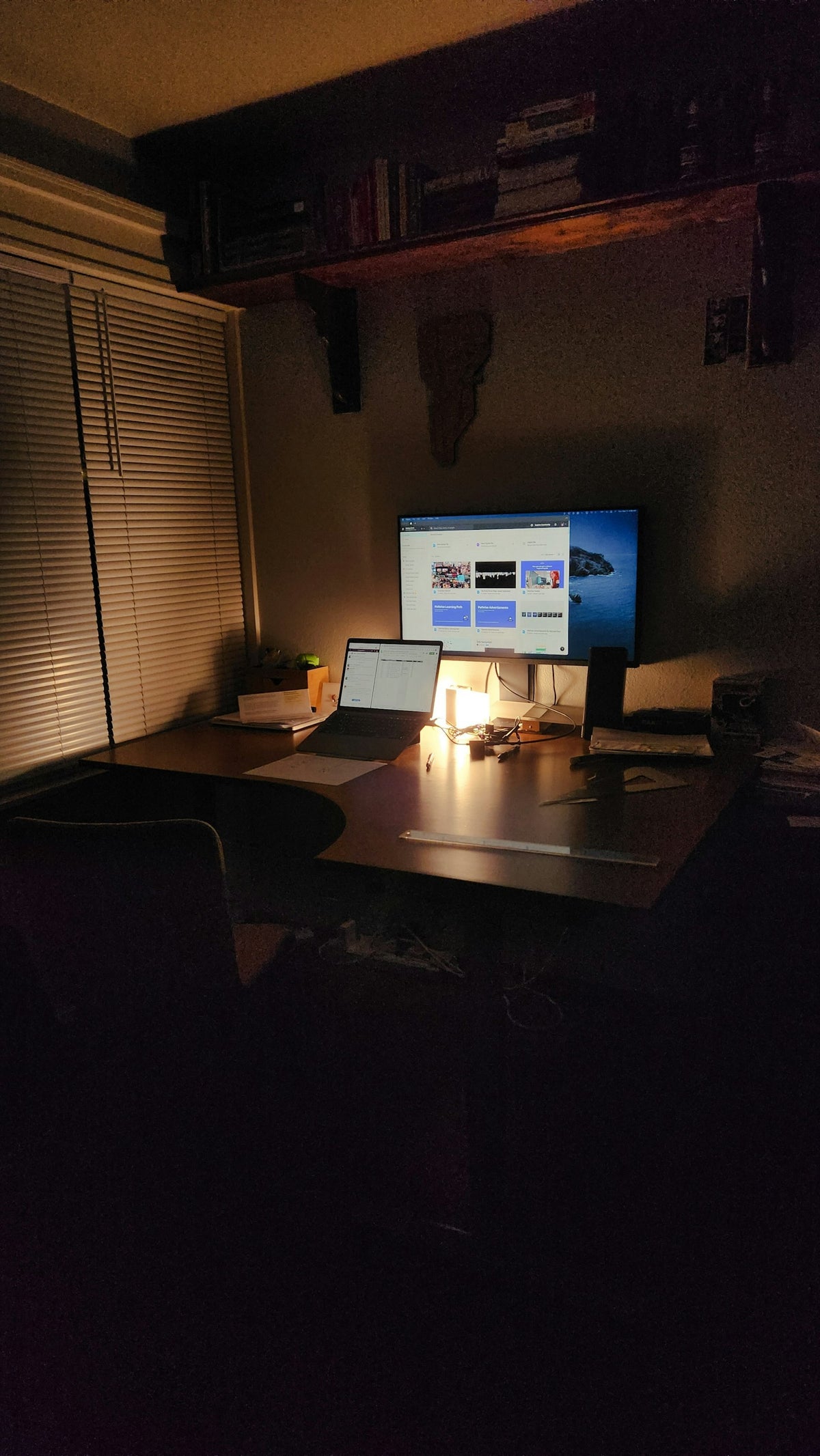
It's 11:47pm and the group chat has gone quiet. Not because everyone fell asleep — because everyone is finally working. Somewhere across campus, laptops are glowing in dorm rooms, kitchen tables, the corner of a 24-hour café that stopped bothering to sweep an hour ago. And in almost every one of those rooms, the same small ritual just happened: a hoodie went on before the work did.

Not a jacket. Not a jumper pulled from the back of a drawer. The hoodie — heavyweight, oversized, worn soft at the cuffs from months of exactly this. It's less an outfit than a decision. Somewhere between closing your last tab of the day and opening the one you actually need to finish, you zip up, and something in you shifts into a different gear. That's the uniform of the late-night student, and it has less to do with fashion than you'd think.
The Ritual Before the Work
There's a real, well-documented reason clothing does this to you. In 2012, researchers Hajo Adam and Adam Galinsky ran an experiment now widely cited as the foundation of "enclothed cognition" — the idea that what we wear changes not just how we're perceived, but how we think. Participants who put on a white coat and were told it belonged to a doctor performed measurably better on attention tasks than those told the same coat belonged to a painter, or who wore no coat at all. The clothing itself hadn't changed. Its meaning had.
Your hoodie is doing something similar every time you reach for it at 10pm instead of 10am. During the day it might just be something warm. At night, pulled on right before a late-night study session, it becomes a signal — to your brain, and to whoever's watching you cross the library floor — that you're not winding down, you're locking in. It's a cue you built for yourself, one long night at a time, until your nervous system started responding to it before you'd even opened your laptop.
Why It's Always the Same Hoodie
Ask any student which hoodie they reach for after dark and most won't hesitate. It's rarely the newest one. It's the one that's been through the most exam seasons, the one that's shrunk exactly right, the one that smells faintly of the desk lamp it's been draped over a hundred times. Heavyweight, not athletic. Oversized enough to disappear into. Soft in a way that cheap fleece never quite manages, because the fabric was built to survive being worn for six, eight, ten hours in a row without going thin at the elbows.

That's not an accident of taste — it's function dressed as comfort. A library at midnight is colder than it has any right to be, heating cut back, everyone hunched a little smaller than usual. A hoodie that's actually heavyweight does more work than people give it credit for: it's insulation, privacy, and permission to stay a while, all in one piece of fabric. If you've ever browsed a late-night edit built for exactly this kind of night, the ones sitting in the New Arrivals, you already know the difference between a hoodie that looks the part and one that's actually built to be lived in until 3am.
The Hours Nobody Sees
There's a particular kind of quiet that only exists after midnight on a campus — half the world, at least. It's the version of student life nobody posts. No one photographs the third coffee, the highlighter running dry, the fourth rereading of the same paragraph before it finally lands. What they don't see is the version of you that shows up anyway, hood up, headphones in, choosing the desk over the bed one more time.
That's the part of "locking in" that doesn't make it into the highlight reel — it's not glamorous, it's just consistent. The uniform helps because it removes a decision from a night that already has too many. You don't have to decide how to feel about being awake at this hour. You already decided, the moment you put it on.
Somewhere tonight, someone else is doing the exact same thing — reaching for the same soft, oversized armor, sitting down to the same unglamorous work, becoming, one late night at a time, the person they're trying to be. The hoodie doesn't do the work for you. It just makes it a little easier to start.
Imagery: Makeen M.Alaa and Yen Vu via Unsplash