The Hours That Belong Only to You

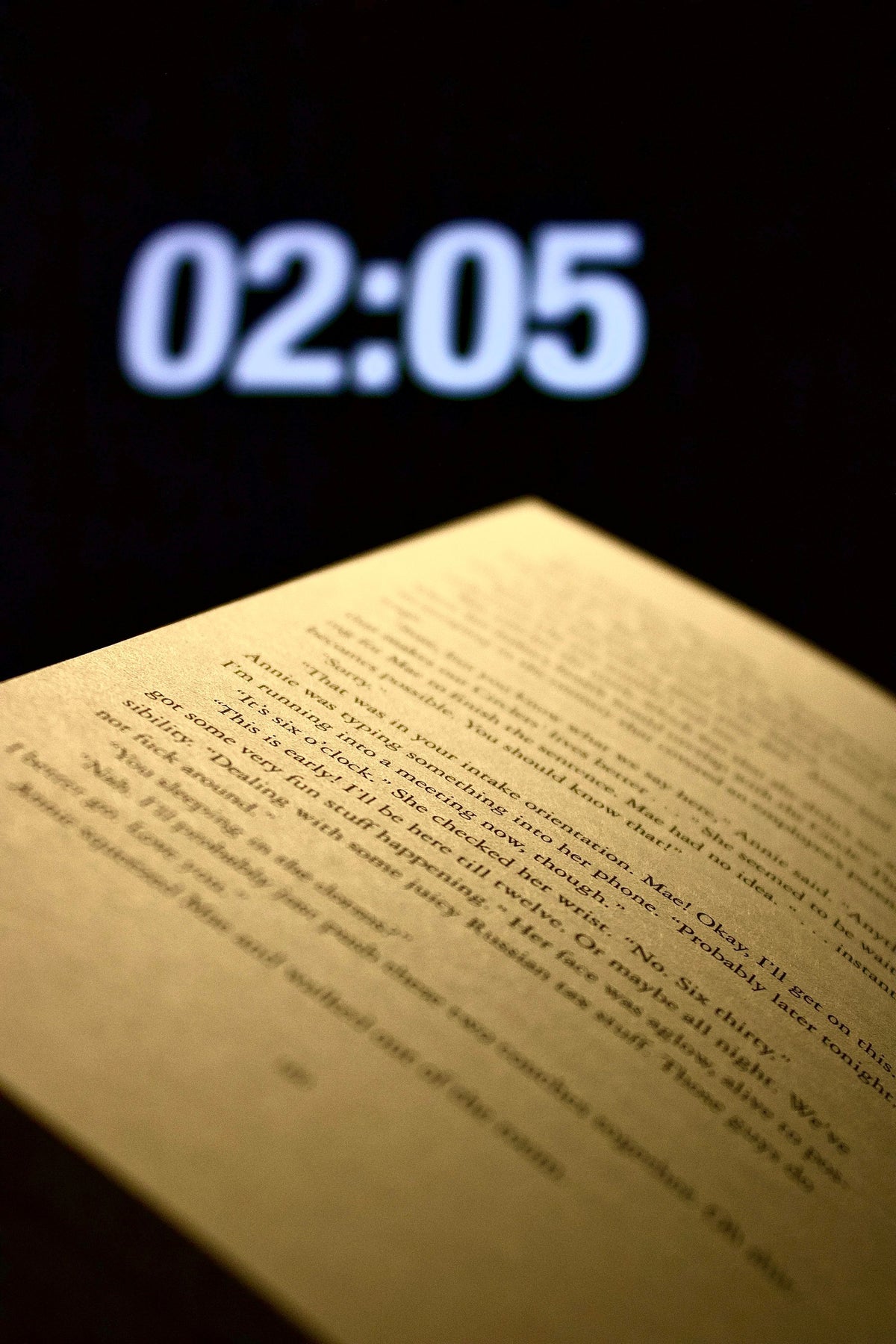
Everyone went to sleep hours ago. The flat has that particular quiet now — not just the absence of noise, but the presence of something else. A stillness that feels almost solid. Your desk lamp throws a small circle of amber light, and everything outside it has disappeared. The street outside is dark. The group chats have gone silent. Your phone sits face-down and nobody is expecting anything from you.
This is 2AM. And strangely, impossibly, it might be your most productive hour.
There is a specific kind of person who understands this — who has turned down the early nights, who has learned that something shifts in them after midnight. If you are reading this at a reasonable hour, you probably still remember the feeling. That unusual clarity. The sense that the hours between midnight and four belong to no one's schedule but your own.
The World Gets Smaller After Midnight
There is something almost cinematic about the late-night hours. Everything contracts. What remains is only what is in front of you: the notebook, the screen, the work. The rest of the day — the group project that went nowhere, the seminar you showed up to half-prepared, the fifteen notifications you still haven't answered — all of it loses its grip. The social performance is over. There is no one to impress and no one watching.
That contraction is not just psychological. It is sensory. Thermal comfort sharpens. You pull the hoodie tighter. The warmth becomes part of the focus. The room gets smaller in a good way — a cave, a cocoon, a space that is entirely yours. Outside might be cold or raining or both, and inside you are wrapped in something that feels like permission to stay exactly where you are and keep going.

Why Some People Think Better After Dark
There is a real biological reason that some people are at their best when the rest of the world has switched off. Chronotype — your natural sleep-wake preference — is not a choice or a habit. It is partly genetic. Evening types, sometimes called night owls, have a circadian rhythm that peaks later than morning types. Their melatonin rises later, their cognitive performance crests later, and their capacity for the kind of open, associative thinking that drives creative work often arrives in the hours that most people write off as too late to be useful.
Beyond biology, there is the simple fact of reduced friction. Late at night, there are no emails arriving, no new tasks being added to your list, no social obligations pulling at your attention. The cognitive cost of managing other people's expectations — which is real and underestimated — falls to almost nothing. What is left is just you and the work. For a lot of people, that is when the real work happens.
None of this means that night is objectively better than day. It means that if you have always felt most alive after midnight, you are not broken or undisciplined. You may simply be working with your actual biology rather than against it.
What You Are Actually Building
Here is the thing about late-night work that nobody really says out loud: it is not just about the task. It is about the person you become when there is no audience.
The essay you finish at 3AM, the code that finally clicks, the design you spent two hours on that might go nowhere — these things matter not only for what they produce but for what they prove to you. That you showed up. That when there was no external pressure, no one watching, no reward except the work itself, you still sat down and did it.
That is a kind of character-building that the daytime version of your life rarely offers. During the day, you are always performing slightly — for lectures, for flatmates, for the version of yourself you want to project. At 2AM, the performance ends. What you make in those hours is a cleaner signal of what you actually care about.

How to Protect Your Late Hours
Late-night productivity only works if the conditions support it. The hours can drift easily — from work to scrolling to half-watching something, and suddenly it is 4AM and you have nothing to show for it except a foggier head. The difference between a productive late night and a wasted one usually comes down to a few things.
Start with the physical environment. Warmth matters more than most people realise. Cold is genuinely distracting — your body spends cognitive resources managing discomfort. This is one reason libraries and study rooms are often too cold to properly settle in. If you are working from your room, keep it warm. A good heavyweight hoodie is not a trivial detail — it is the difference between being present in your work and being half-present while part of your brain is managing being cold. The Hüdíe Eclipse Panel Hoodie was built for exactly this: the long hours, the lit screen, the reluctance to stop when things are going well.
Beyond warmth, pick one thing. Not a list. Not three open tabs of different work. One project, one focus, one direction. Late nights are not built for multi-tasking. They are built for depth. And when you feel the pull toward your phone — toward scrolling and social content — try to recognise it for what it is: the brain looking for an easier dopamine hit than the one your actual work will eventually provide. The work's reward comes later. Trust it.
Know when to stop, too. There is a version of late-night productivity that tips into diminishing returns — where you are sitting at the desk out of inertia rather than momentum. If the words have stopped coming and the ideas have gone grey, sleep is not failure. It is maintenance.
The Part That Stays With You
What you remember from a really good late night is not usually the specific thing you made. It is the feeling of being fully in it — the quiet, the warmth, the particular quality of attention that the small hours seem to summon. The grey light eventually comes in at the window. You close the laptop or put the pen down. The world starts up again around you.
But for a few hours, it was yours. Entirely, quietly yours.
That is what the late hours offer, if you learn how to use them.