The Only Fit Guide Your Hoodie Actually Needs

It's 8:52 for a 9:00 lecture. You didn't plan an outfit, you grabbed the hoodie off the chair, and somehow you still look like you know what you're doing. That's not luck. That's an oversized hoodie fit doing exactly what it's built to do — carry the whole look without asking you to think about it.
Nobody tells you this in first year, but there's an actual logic to why some people's hoodies look intentional and other people's look like they slept in them (even when neither one did). It's not about spending more. It's about understanding the two or three things that separate "thrown on" from "chosen."
The Rule Everyone Gets Wrong About an Oversized Hoodie Fit
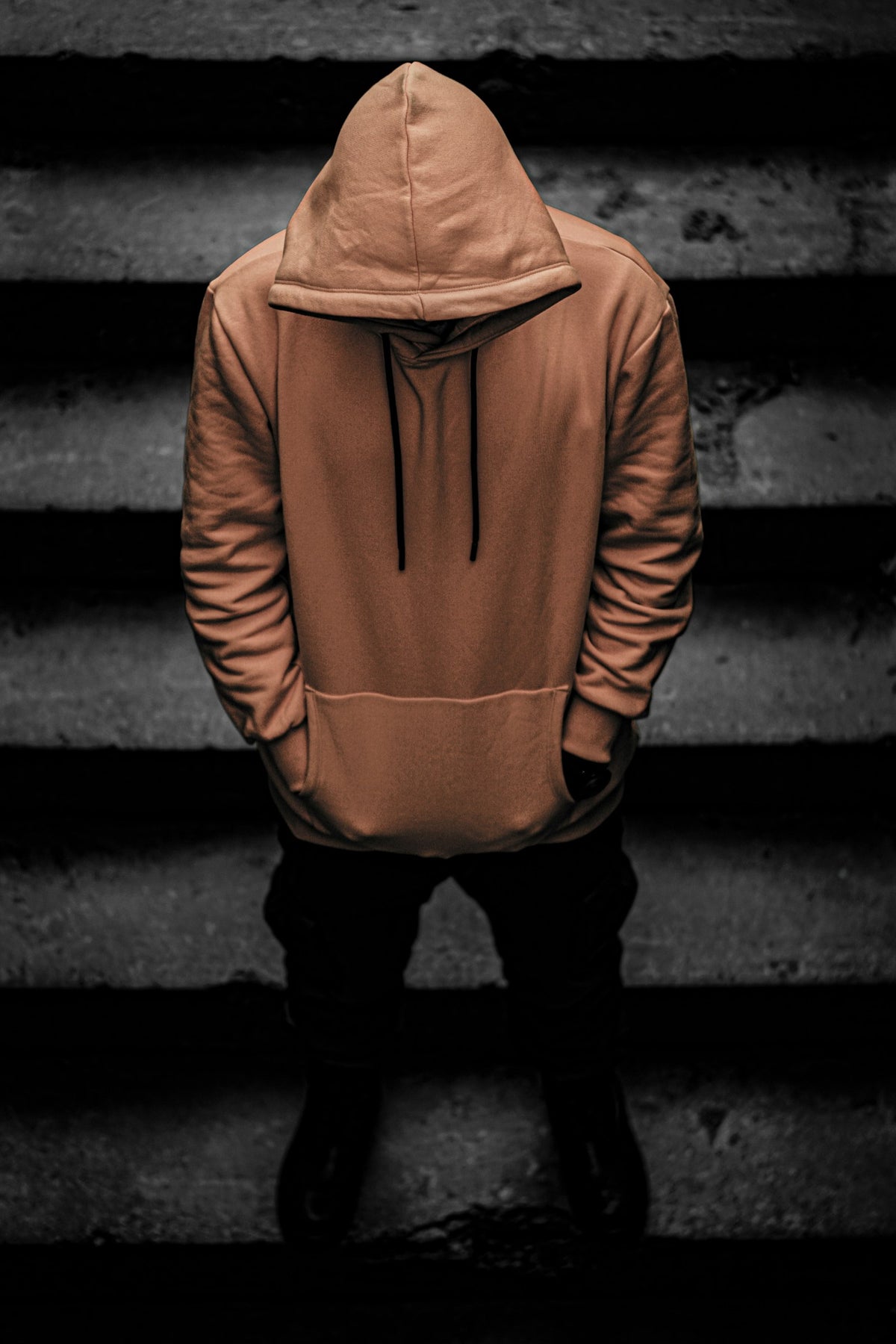
The instinct is to size up until the hoodie swallows you. That's the mistake. An oversized hoodie fit isn't about maximum volume — it's about proportion. The shoulder seam is the anchor: when it drops just past your natural shoulder line, the whole hoodie hangs with structure instead of pooling into a shapeless blob. Go one size past that and you're not wearing a hoodie anymore, you're wearing a blanket with sleeves.
The second thing nobody mentions is length. A hoodie that hits mid-hip reads as intentional. One that hits mid-thigh reads as borrowed from someone taller than you. If you're not sure, hold your arms straight down — the hem should land somewhere between your wrist and the top of your thumb. That's the zone where oversized still looks like a decision.
What Actually Goes Under and Around It
The hoodie is doing the heavy lifting on volume, so everything else on your body needs to do the opposite. This is the whole trick, and it's simpler than any styling account makes it look:
Bottoms should taper. Straight-leg or slim joggers, tapered trousers, cuffed sweatpants — anything that narrows toward the ankle balances out the width up top. Wide-leg bottoms plus an oversized hoodie just reads as two loose shapes fighting each other.
Footwear grounds the whole thing. Chunkier trainers or boots give the silhouette a base to stand on. Thin-soled shoes under an oversized top can make you look like you're floating in your own clothes.
Layering underneath is where heavyweight fabric earns its keep — a thermal or long-sleeve tee peeking out at the cuff and collar adds a second texture without adding bulk, which matters more in a library that's fifteen degrees colder than it should be than it does in a photo.
Why Heavyweight Fabric Does the Styling for You
This is the part people underestimate. A thin hoodie has no drape — it clings, it wrinkles, it looks like a T-shirt that got ambitious. A genuinely heavyweight cotton, the kind with actual density in the fleece, holds its own shape. It sits square on the shoulders instead of slouching. It doesn't need ironing, styling, or a second thought before you leave the dorm. The fabric is structural, not decorative, and that's the difference between a hoodie that looks put-together at 9pm in a study room and one that looked fine for exactly the first hour you had it on.
That's the whole idea behind pieces like the Eclipse Panel Hoodie — brushed fleece with actual weight to it, cut so the shoulder and length do the proportion work automatically. You're not styling it so much as putting it on correctly once and never thinking about it again.
The Quick Version
If you only remember four things before your next 8am:
- Shoulder seam drops just past your actual shoulder — not the elbow
- Hem lands between wrist and thumb when arms are relaxed
- Tapered or slim bottoms balance the volume up top
- Heavier fabric holds structure so you don't have to
None of this is about performing effort. It's the opposite — it's about looking like you didn't have to try, because the fit was already right before you left the room. That's the whole point of a uniform: it frees up the part of your brain that would otherwise be spent deciding what to wear, so it can go toward whatever you actually got up for. The hoodie isn't the outfit. It's the thing that lets you stop thinking about the outfit at all.

Imagery: Ali Saadat and Jannes Jacobs via Unsplash