Why Your Best Work Happens When Everyone Else Is Asleep

The clock hits midnight. The group chat goes quiet. Your roommate's light disappears under the door. And that's when you finally open your laptop.
There's a version of productivity that happens in board meetings and morning routines and 6am gym sessions. That's not this. This is the other version — the quieter one. The one where the document that wouldn't write itself at 3 in the afternoon somehow fills up in the hour before 2am. For a certain kind of student, studying at night isn't a coping mechanism. It's not procrastination repurposed. It's a genuine preference, and there's more science behind it than most people admit.
The Science Behind Studying at Night
Chronotypes are real. They're not just excuses. A chronotype is your body's biological preference for when to sleep and wake — and researchers estimate that roughly a third of people are natural evening types. Their alertness hormones peak later in the day. Their working memory, reaction times, and creative problem-solving all hit their stride after most people have gone to bed.
Research from Imperial College London found that people who identify as night owls score higher on measures of cognitive function compared to early risers. Not because they're inherently smarter — but because their brains are simply operating closer to their natural peak when the rest of the world has logged off. If you've spent years feeling guilty about not being a morning person, it's worth sitting with that for a moment. You might not be behind. You might just be calibrated differently.
Why the Night Feels Like a Different Country
Part of it is neurological. Part of it is environmental.
By midnight, the noise floor of the world drops dramatically. There are no notifications that urgently need responding to, no group chat debates spiralling in real time, no one asking if you're free later. The decision fatigue that accumulates throughout a normal day — the hundreds of small choices you make between waking up and 10pm — has largely burned off. What's left is space.
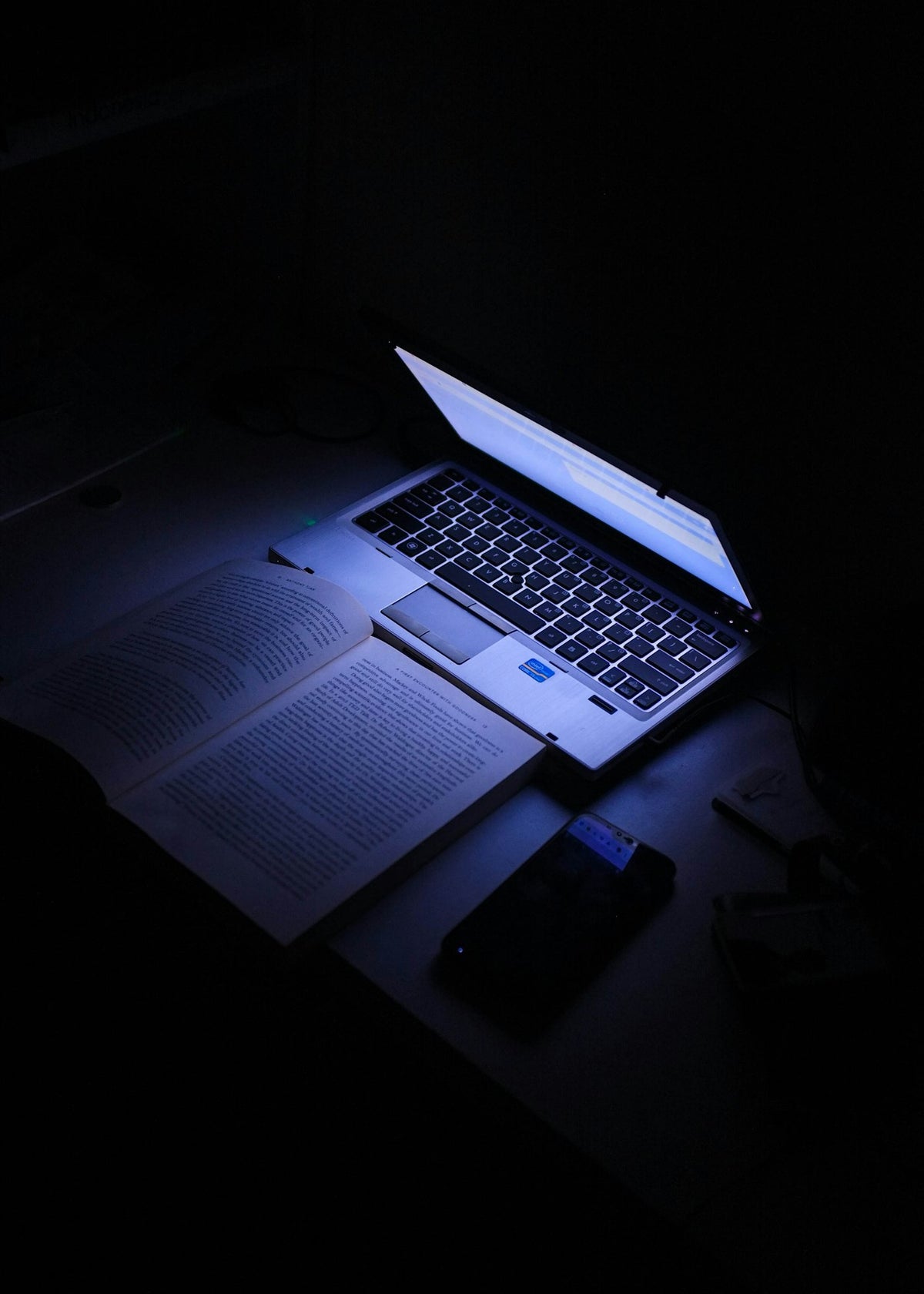
And then there's the cold. Libraries are always cold, but at night even a dorm room has a different temperature, a different stillness. You pull your hoodie tighter. The glow of the screen narrows your world down to what's in front of you. There's something about that physical containment — being wrapped up, warm, in a small pool of light — that focuses a certain kind of mind in a way that nothing else quite manages. The people who know, know.

How to Actually Build a Late-Night Ritual
The difference between a productive night session and an aimless one usually comes down to anchors — a few deliberate signals that tell your brain the context has shifted.
Start with something physical. A drink, a change of clothes, a moment of intentional settling in. That hoodie isn't just warmth. It's a cue. When you put on something heavyweight, something that actually holds heat, there's a small signal sent: we're going in. Comfort as preparation, not reward.
Keep your setup minimal. One tab. One task. The night is better when it has a single focus rather than twelve. You're not trying to catch up on everything — you're trying to move one thing forward meaningfully. The midnight hours are too good to waste on half-attention.
Give yourself a finish line. The best late-night sessions aren't open-ended. "I'll keep going until I'm done" usually ends at 4am with diminishing returns and a headache. "I'll finish this section by 1am, then stop" usually ends with something you're actually proud of.
And drink water. Before the coffee, during the session, after. Dehydration is the thing no one talks about when diagnosing why their night sessions feel foggy. The coffee is not the problem. The lack of water before the coffee is.
The Quiet Ambition of 2AM
There's something else happening at night that's harder to articulate.
When you're awake at 2am working on something — an essay, a project, a business plan, a creative portfolio — and everyone around you is asleep, there's a particular feeling that doesn't have a clean name. It's not smugness. It's not martyrdom. It's closer to a private sense of investment. The feeling that you're putting something in that won't show up immediately, but will show up eventually.
Studying at night, for a lot of students, is actually an act of quiet belief. Belief that what you're building matters. That the hours you're putting in now have some relationship to the life you're working toward. That being tired tomorrow is worth something today.
That feeling doesn't require an audience. It doesn't need to be posted. It's just you, and your work, and the particular silence of a building full of sleeping people.
That's the world Hudie was built around. Not the performance of productivity — the actual practice of it. Warm, focused, unhurried. The hoodie for that kind of night.
Not everyone is built for mornings. Not every ambitious mind fires at 9am. Some of the best work being done right now is happening quietly, after midnight, in rooms lit by a single lamp and a lot of determination.
If that sounds like you — you're not behind. You're just working on your own schedule.
Imagery: Clint Patterson and Decry.Yae via Unsplash